

How to Begin Research in our Archive
The archive is a privately funded and operated research archive.
Our collections do not circulate, but we strive to work with the public to provide resources and help where we can. The first step in your research should include identifying resources available at public and state funded libraries and archives with large collections and access policies.
If you are now ready to make an appointment for a fee, please go to Our Collections page to schedule your visit.
For inquiries into our collections and finding aids, please email khs@konahistorical.org.
Jean Greenwell Library & Archives
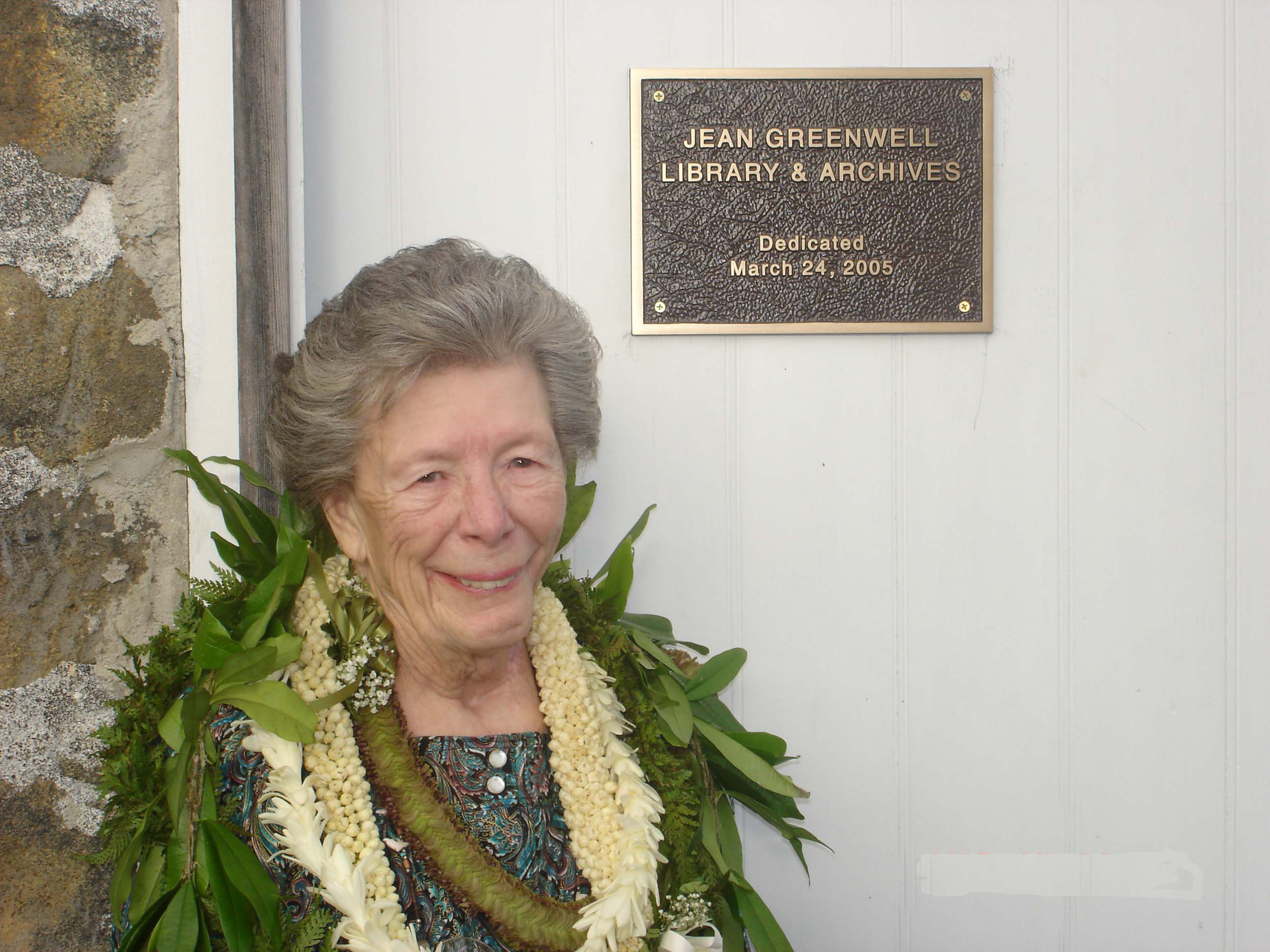
For over 30 years, Jean Greenwell was the principal historian at the Kona Historical Society. Born in Loma Linda, California, Jean came to the island of Hawai`i from the New Mexico State University in 1950 to work as a kindergarten teacher at Ola`a Elementary. She married Kona rancher Norman Greenwell and spent much of her life raising a family and researching Kona’s history.
From the very start, Jean had an appreciation for the Hawaiian culture, language, and history. She learned to speak and read Hawaiian, and with the guidance of her mentor, Dorothy Barerre, took on the task of collecting all references to Kona history scattered among repositories throughout the islands. This voluminous body of work was organized and compiled into the file and folder collections now referred to as the Jean Greenwell Research Collection and is the foundation for the Kona Historical Society’s archives. Jean’s generosity in sharing her knowledge has inspired others, and as a result, the archive has grown and now includes diverse sources of research and many photograph collections donated by Kona families.
The archive consists of collections of historical photographs, unpublished diaries, journals, letters, family records and memorabilia, land documents, and selected Kona newspapers and articles. Records of local coffee enterprises, ranches, community clubs, and ethnic organizations include correspondence, minutes of board and committee meetings, financial records, and publications.
The Manuscript Collection includes significant primary material, dating from around 1850 to 1990. The collection illustrates the history of Kona agriculture, coffee, ranching, and beef production; and its churches and missionary activity, civic organizations, and small businesses.
The Society’s Visual Images Collection is comprised of both still photographs and moving images. Between 1980 and 1988 the prints, negatives, and slides in the Photograph Collection were organized, arranged by subject, and made accessible to the public. The Photograph Collection, holds over 50,000 images depicting such subjects as ethnic culture, geography, agriculture, religion, and education in Kona between 1790 and 1994. The Moving Images Collection includes approximately 15,000 feet of restored film depicting Kona between 1930 and 1960, videotapes, and DVDs.
The Oral History Collection includes approximately 100 hours of taped oral history interviews on topics related to life in Kona between 1900 and 1960, ranching, agriculture, coffee, ethnic lifestyles and diversity, employments, and avocations.
The Map Collection consists of over 150 maps of the North and South Kona districts, including the mauka ranch lands; most are reproductions, with a few original hand-drawn maps.
Place Names of Kona is the electronic database that brings together the research of Dorothy Barrere, Lloyd Soehren, and Jean Greenwell. With each researcher using different source material, they were able to pool their extensive knowledge to create this compilation of the place names used by the Hawaiians to describe the Kona environment.
The Hawaiian Kingdom Property Tax Records for the years 1859, 1875, 1881, 1885, 1888, and 1890 have been entered into a research database at the Kona Historical Society archives. The tax records can be used to understand many aspects of Kona’s history: social issues, such as illness, death, and resident mobility into and out of Kona; ethnic land ownership and leasing; and the evolving ethnic participation in the various Kona industries—ranching, fishing, merchandising, and plantation development—during the critical period of 1850-1900.
C.Q. Yee Hop Ranch Oral Histories Project
This oral histories project preserves the stories and lived experiences of individuals connected to the C.Q. Yee Hop Ranch and neighboring ranching communities in South Kona. Together, these narratives document a unique way of life shaped by ranching, family, and the diverse cultural landscape of Kona. The project was also generously funded by the C.Q. Yee Hop Ranch, whose support helped make the preservation and sharing of these histories possible.
The history of the ranch traces back to Chun Quon, who was born in China in 1867 and arrived in Hawaiʻi in the late 19th century. After establishing himself as a merchant in Honolulu, he founded the Yee Hop Company and later C.Q. Yee Hop & Company. In 1913, he entered into a partnership with the Ontai brothers of Olelomoana Ranch, expanding operations across approximately 25,000 acres of land in South Kona.
While ranching was the primary focus, the discovery of abundant koa and ʻōhiʻa forests in the region led to the development of a thriving woodcraft industry. Through the Hawaiian Hardwood Company, these natural resources supported furniture production and contributed to wartime efforts during World War II. The ranch also provided employment for many local families, reflecting the interconnected relationships between land, labor, and community.
The oral histories in this collection offer personal perspectives that bring this history to life—highlighting daily life on the ranch, generational knowledge, and the enduring legacy of South Kona’s ranching communities.
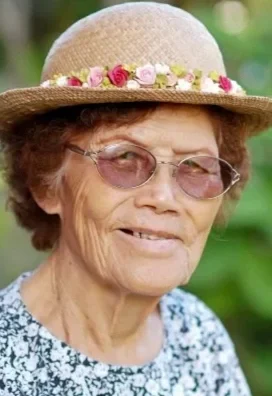
Gladys Grace Ontai
This oral history interview with Gladys Kukana Grace Ontai documents her life and experiences growing up in South Kona, Hawaiʻi, in the early 20th century. The interview covers her family background of Native Hawaiian and Chinese ancestry, her upbringing under the care of her father and grandmother, and the subsistence lifestyle practiced in rural Kona communities. Key topics include ranching and cowboy life, coffee farming, kalo (taro) cultivation, and household labor, as well as the economic importance of lauhala weaving. Grace also discusses cultural practices such as ʻŌlelo Hawaiʻi (Hawaiian language) use, traditional medicine, storytelling, and spiritual beliefs. Additional themes include education, migration to Honolulu for work, multicultural community interactions, and the transition from rural to urban life. The interview provides insight into intergenerational knowledge transfer, community cooperation, and the social and economic conditions of ranch-era Hawaiʻi.
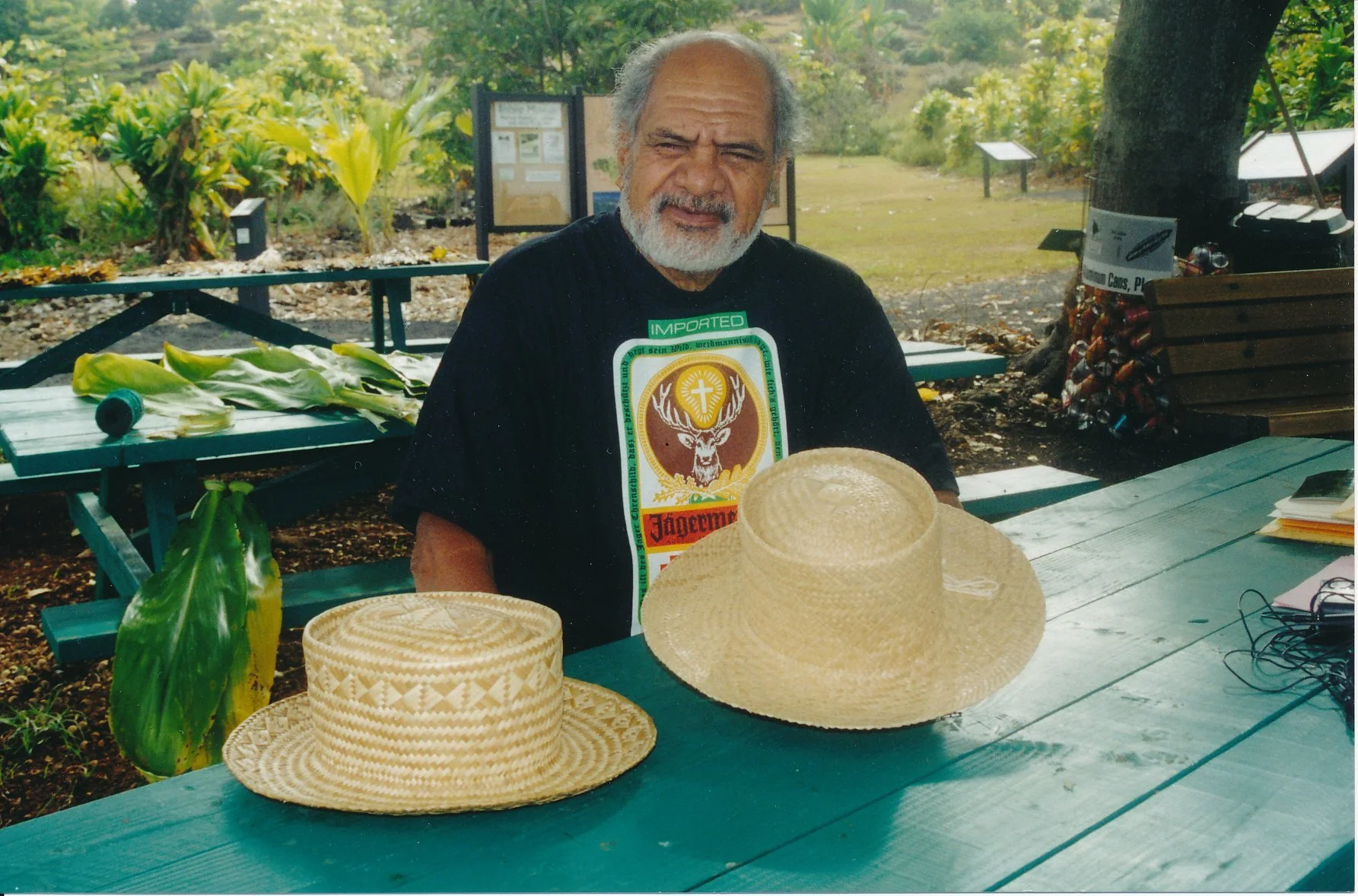
Blue Kema
The oral history of Wallace Puako “Blue” Kema provides a vital firsthand account of life in rural South Kona during the early to mid-20th century, illustrating how communities sustained themselves through a blend of subsistence practices, ranch labor, and strong social networks. Through his experiences growing up in areas like ʻŌpihihale and working for rancher C. Q. Yee Hop, Kema reveals the everyday realities of paniolo culture, multi-ethnic community life, and informal economies that are often overlooked in traditional historical narratives. His recollections not only document disappearing practices such as fishing, farming, and resource sharing, but also highlight how local people adapted to environmental challenges like the 1950 eruption of Mauna Loa. Ultimately, this oral history is significant because it preserves the lived experiences and cultural knowledge of a generation whose stories deepen our understanding of Hawaiʻi’s social and economic transformations.
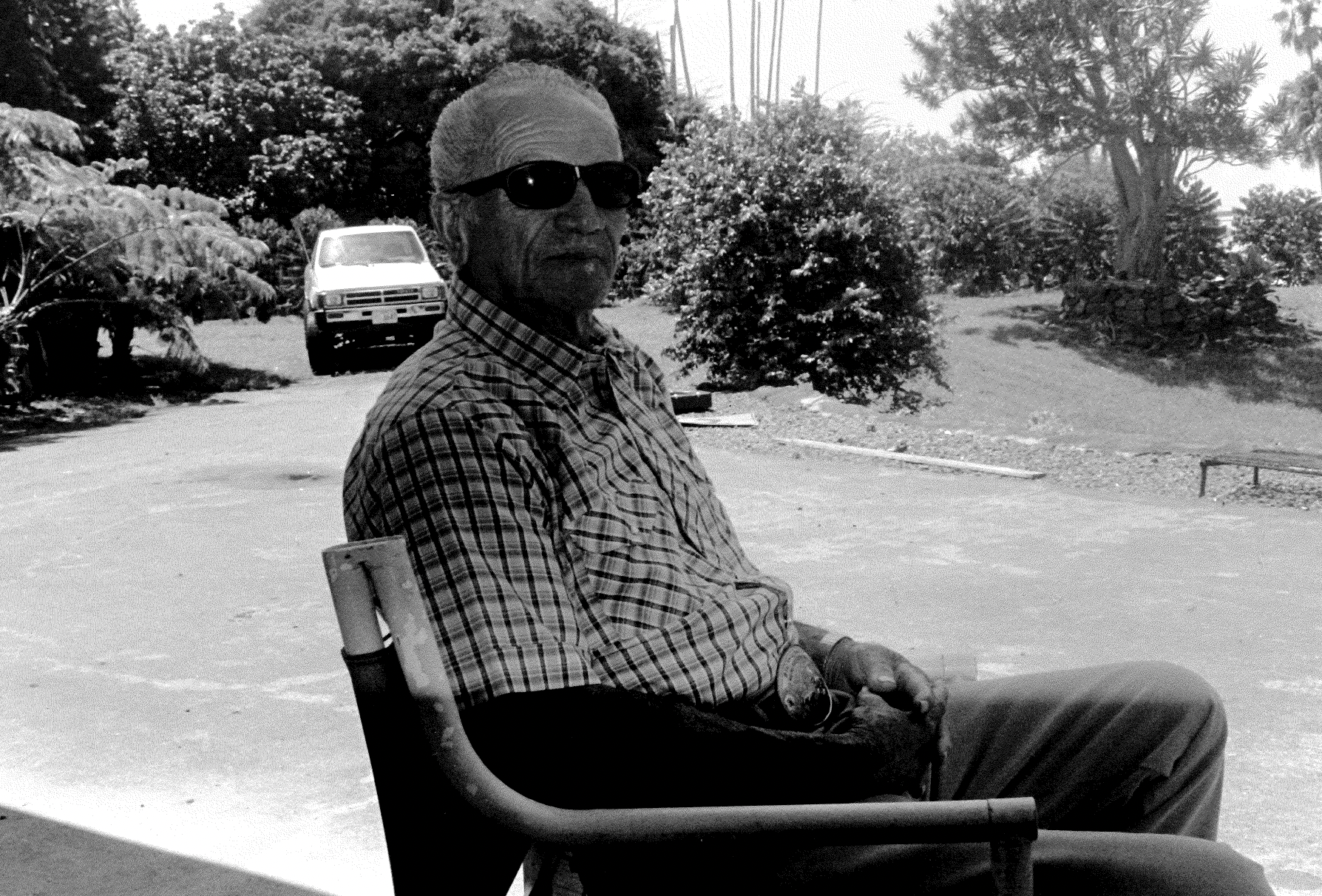
Medeiros, John Bernard Jr.
This oral history interview with John Bernard Medeiros, Jr., conducted in August 1999 in Honomalino, South Kona by Kuʻulani Auld, documents Medeiros’s early life, family background, and experiences growing up in rural Kona during the early to mid-20th century. The interview relates information spanning roughly the 1930s through the 1960s, with particular emphasis on Medeiros’s youth in South Kona and his transition into adulthood. He recounts his birth in 1927 at Kona Hospital and his upbringing, highlighting the importance of extended family networks, including the Kalani family. Medeiros discusses his experiences becoming a cowboy and his work on C.Q.Yee Hop Ranch, McCandless Ranch and Puʻuwaʻawaʻa Ranch, providing insight into ranching practices, labor conditions, and daily life within Hawaiʻi’s cattle industry. The interview also reflects on his grandparents’ involvement in ranch labor, particularly cowboy work for the Greenwell family, and offers perspectives on dairy operations and subsistence living. Overall, the narrative highlights themes of rural community life, multi-generational households, agricultural labor, and the social and economic structures that shaped life in the Kona district.
Bobby Hind
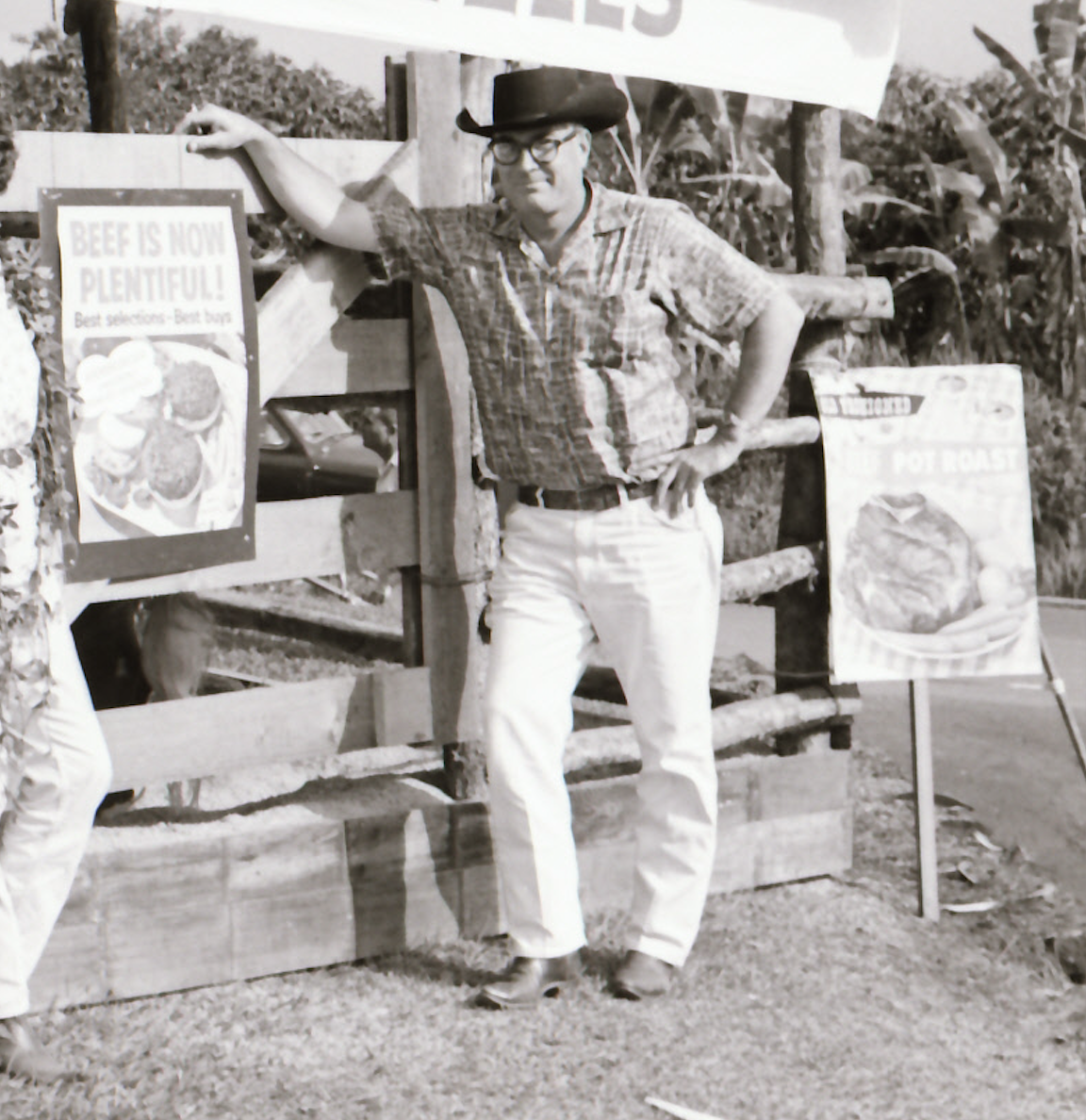
The oral history interview recorded on cassette tape with Bobby Hind, recorded and transcribed by Megan Mitchell, provides a detailed account of ranching life and land use in South Kona, revealing the complex relationships between labor, land ownership, and environmental adaptation in early 20th-century Hawaiʻi. Through Hind’s recollections, along with supplementary notes by Jim Passon, the interview traces the history of ranching areas such as McWayne Ranch and Honomalino, including the transition of land from German families during World War I to new ownership under J. B. Cassell. Hind describes ranching practices that often relied on unmanaged cattle herds, limited animal husbandry, and creative solutions to environmental challenges such as water scarcity across regions from Kailua to Keauhou. Ultimately, this interview is important because it preserves a firsthand perspective on how ranching communities in Kona adapted to shifting political conditions, economic realities, and environmental limitations, offering valuable insight into Hawaiʻi’s rural past.
If you’d like to learn more about the C.Q. Yee Hop Ranch Oral Histories Project, please note that the Jean Greenwell Library & Archive is a privately funded and operated research archive.
While our collections do not circulate, we are committed to supporting the public by providing resources and research assistance whenever possible. As a first step, we encourage researchers to explore materials available through public and state-funded libraries and archives, which often offer broader collections and public access policies.
If you are ready to schedule a research appointment for a fee, please visit Our Collections page to schedule your visit.
For inquiries into our collections and finding aids, please email khs@konahistorical.org.